5 Checkpoints to Fix a Collapsing Ballroom Frame
Quick Answer: A collapsing frame usually traces to 5 specific checkpoints: dropped shoulder blades, a caved chest, a bent supporting arm, disconnected core engagement, and looking down instead of maintaining eye-line. Fixing these in order restores frame stability faster than general ‘stand up straighter’ cues.
A collapsing frame isn’t really about strength — it’s usually one or two specific checkpoints breaking down under the demands of movement. Here are the 5 to check, in the order that tends to matter most.

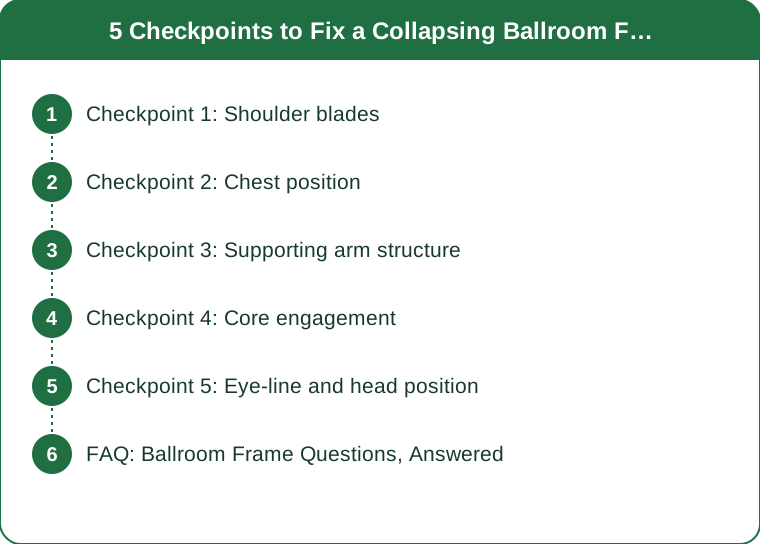
Checkpoint 1: Shoulder blades
Shoulder blades should stay gently drawn down and slightly back, not shrugged up toward the ears and not overly pinched together. A frame that collapses often starts here — shoulders creeping upward under tension, which then cascades into the rest of the upper body losing structure.
Checkpoint 2: Chest position
The chest should stay lifted and open, not caved inward — think of a gentle upward lift from the sternum, not a forced puffed-out position. A caved chest is one of the most common visible signs of a collapsing frame, and it usually happens under the stress of trying to execute footwork simultaneously.
Checkpoint 3: Supporting arm structure
The frame arm should hold a consistent, slightly firm curve — neither locked rigid nor allowed to bend and soften under partner pressure. A frame arm that bends under the natural pressure of connection is one of the fastest ways the whole frame reads as collapsed to a partner or a judge.

Checkpoint 4: Core engagement
A stable frame depends on core muscles doing the structural work, not just the arms and shoulders. Without core engagement, the upper body has no stable base to hold its position from, and frame quality degrades specifically as footwork gets more complex and attention shifts away from the upper body.
Checkpoint 5: Eye-line and head position
Looking down at your feet pulls the whole upper body forward and down, collapsing the frame from the top. Maintaining a level eye-line, even when uncertain about footwork, keeps the frame’s structural alignment intact — this is a smaller cue but a surprisingly common overlooked cause.
FAQ: Ballroom Frame Questions, Answered
Which of these 5 checkpoints should I fix first?
Shoulder blades and core engagement tend to have the biggest downstream effect on the rest — starting there resolves the most common collapse patterns fastest.
Is frame mostly about strength or about awareness?
Mostly awareness and consistent practice of the checkpoints — most social and competitive dancers have enough strength; what’s missing is consistent attention to these specific points under the distraction of footwork.
Can I practice frame without a partner?
Yes — practicing frame position in front of a mirror while walking through basic steps, checking each of the 5 checkpoints, builds the awareness that then holds up under partner pressure.
TL;DR:
- Shoulder blades, chest, supporting arm, core, and eye-line are the 5 frame checkpoints
- Shoulder blade position tends to be the earliest sign of a collapsing frame
- Core engagement gives the upper body a stable base to hold position from
- Practicing checkpoints solo in a mirror builds awareness that holds up with a partner
Frame breakdown is almost always a checkpoint issue, not a general strength problem.
Keep Reading
This article is for general informational and styling purposes only. Fit, sizing, and product availability may vary.