5 Checkpoints for Dancing in a Cold Hall Without Losing Your Frame
Quick Answer: Cold tightens the muscles that hold your frame, reduces the fine balance control you rely on for turns, and makes floors slicker and shoes harder. Warm up considerably longer than you think you need, keep your upper back and shoulders covered until you actually dance, and check your shoe soles before the first number. Most cold-hall problems show up as frame collapse and hesitant footwork - both of which are temperature effects, not technique regressions.
The hall is 55F, the first waltz feels stiff, and by the third dance you are wondering where your frame went.
Five things to check, in the order they actually matter.
Checkpoint 1: Your upper back, before anything else
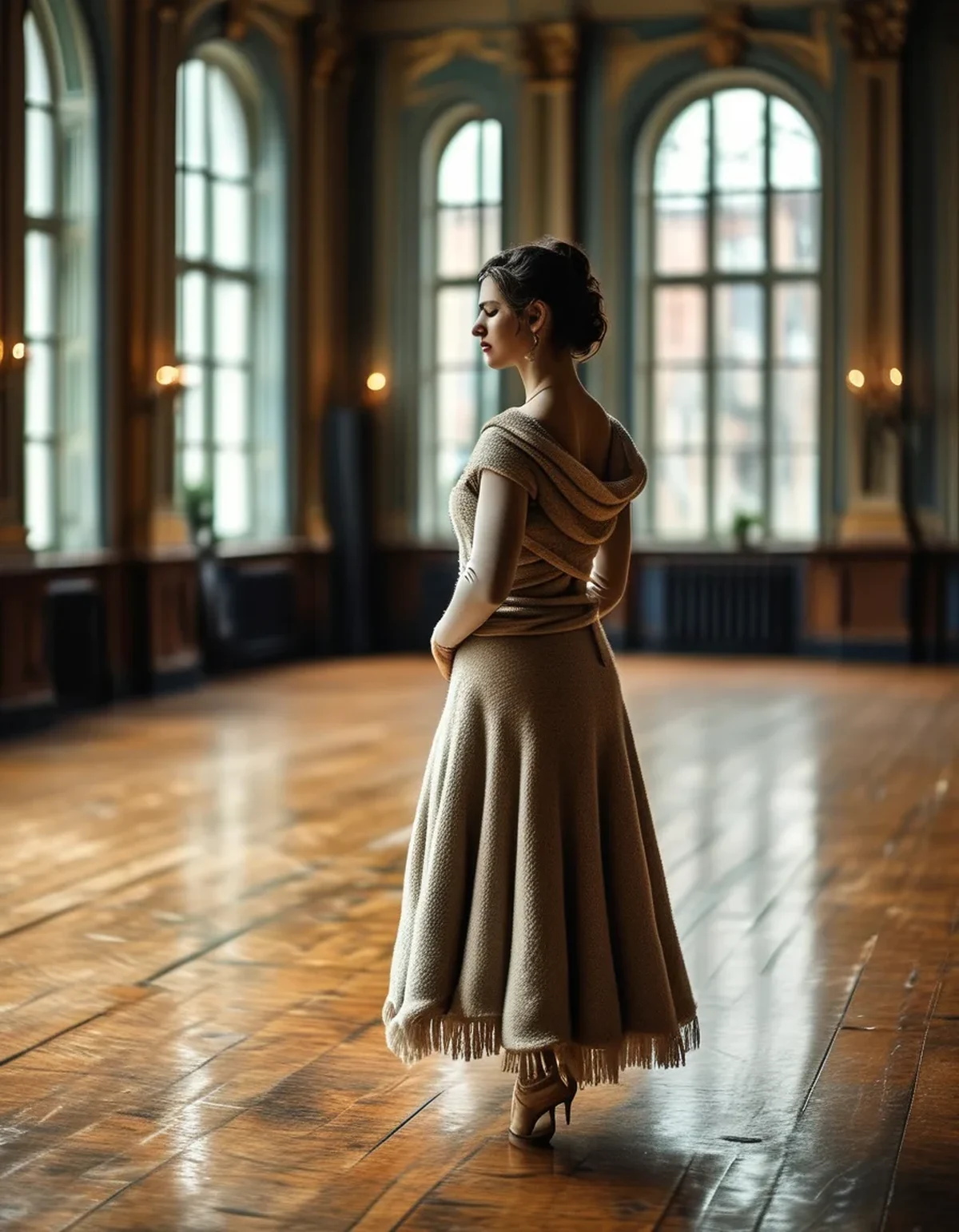
Frame lives in the upper back and shoulders, and those are exactly the muscles that tighten first in a cold room.
A good frame requires sustained low-level contraction across the mid and upper back with mobile, relaxed shoulders. Cold produces the opposite: it encourages the shoulders to rise and the chest to close, which is a protective posture and the direct enemy of a wide open frame.
The fix is coverage and warmth before you need the frame, not after. Keep a wrap or a jacket on through the whole warm-up and take it off at the last possible moment. Dancers who arrive, take their coat off, and immediately try to hold frame are asking cold muscles to do sustained work they are not ready for.
Specific preparation that helps: arm circles, shoulder blade squeezes, and thoracic rotations - two minutes of each, before the first dance rather than during it. The upper back needs more warm-up than the legs in a cold hall, which is the reverse of most people’s routine.
Checkpoint 2: The floor, which changes in the cold
Wooden floors behave differently in cold and dry conditions, and it affects footwork immediately.
Cold, dry air means less moisture in the wood and in the air above it. Floors generally become slicker, which changes how much you can commit to a weight transfer and how confidently you can drive through a step.
The uncertainty is the real problem. Hesitant footwork - shortening steps, not fully transferring weight, staying back on the heels - is a natural response to an unpredictable surface, and it degrades everything above it. Frame follows footwork.
Walk the floor before the first dance. Take a dozen steps, try a turn, feel how much grip is there. Thirty seconds of information stops an hour of tentative dancing.
If the floor is genuinely slick, most halls have a resin or floor treatment available, and it is reasonable to ask. Adjusting your shoes is the other half of the answer.
Checkpoint 3: Your shoes, which get harder
Suede soles stiffen in the cold and pick up less floor, which compounds the slickness problem.
Two checks before you dance:
Brush your soles. Suede compacts with use and cold makes it worse. A wire shoe brush restores the nap and noticeably improves grip. This takes fifteen seconds and most people skip it for months at a time.
Warm the shoes if they have been in a cold car. Leather stiffens and the whole shoe becomes less responsive. Keeping them in your bag indoors rather than in the boot of the car overnight is the easy version of this.
Also worth knowing: cold feet themselves reduce your ability to feel the floor, and that feedback is a real part of balance and weight transfer. Warm socks until you change into dance shoes is not fussiness - it is the same principle as keeping your hands warm for any fine-motor task.
Checkpoint 4: Balance and turns take longer to come online
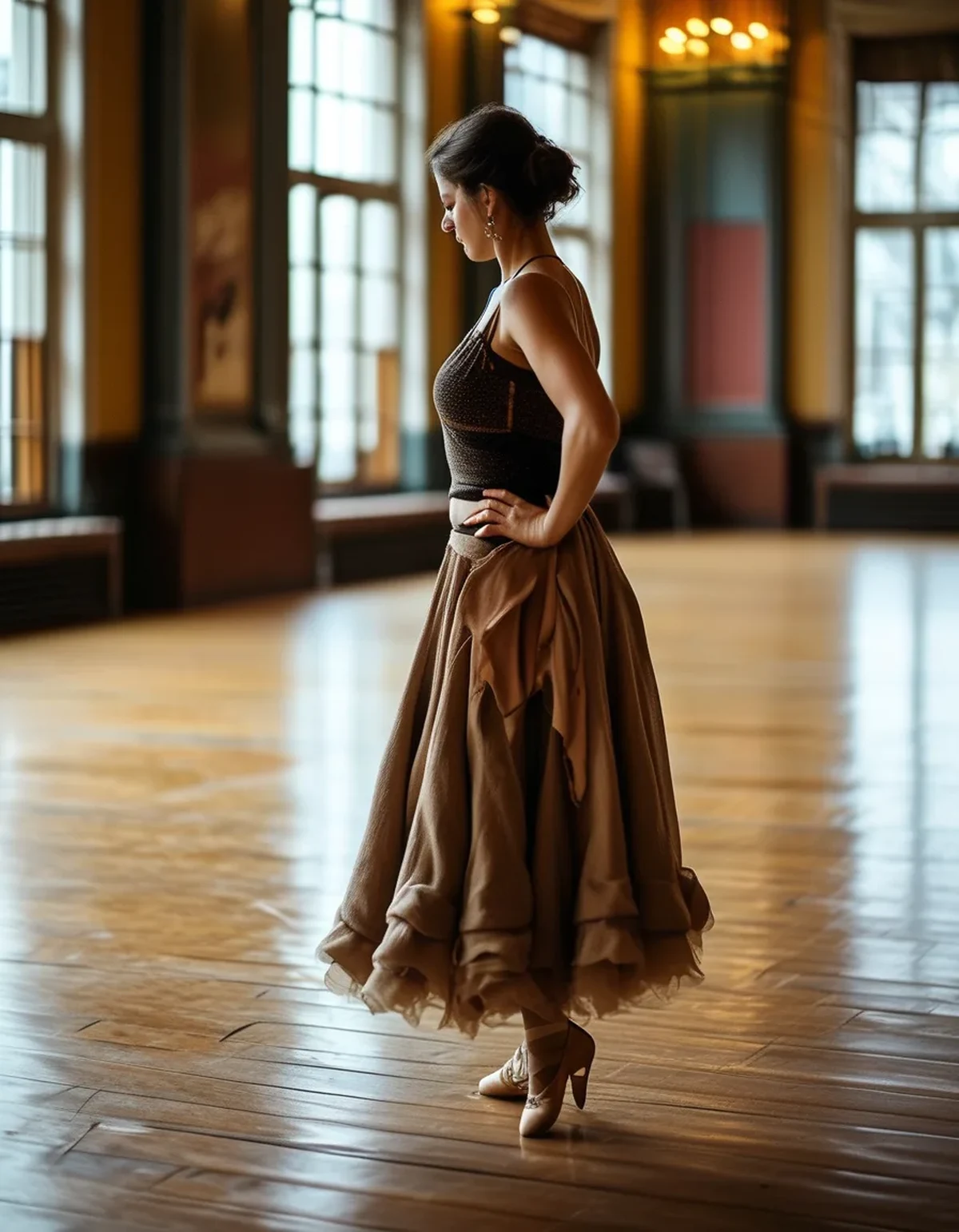
Turns depend on fine postural control, and the vestibular and proprioceptive systems that manage it work slightly less precisely when you are cold.
The practical effect is that spins and pivots feel less certain in the first fifteen minutes than they do later. People interpret this as having a bad night and start adjusting technique - shortening the turn, breaking the spot, changing the arm position - which then persists after the body has warmed up.
A better approach is to structure the session around it. Put simpler, more grounded material first: walks, basic figures, anything that builds heat without demanding precision. Save turn-heavy material for twenty minutes in.
If you are running the practice, this is worth building into the plan rather than leaving to chance. A cold-hall session that opens with spins is going to feel discouraging for reasons that have nothing to do with anyone’s ability.
Checkpoint 5: Layers you can dance in, not just wait in
The classic mistake is a big coat that comes off and leaves nothing, so you cycle between too hot and too cold all evening.
What works in a cold hall:
- A fitted long-sleeve base you can dance in for the whole session. Merino or a thin technical fabric - warm, not bulky, no interference with a partner’s hand placement.
- A wrap or shrug for the upper back that comes on and off between dances without a full change. The upper back is where the warmth actually needs to be.
- Legwarmers or track pants over dance clothes while sitting out, removed to dance.
- Nothing bulky at the shoulder or the back, since that is where a partner’s frame connects.
The test for any layer is whether you can dance a full number in it. Something you have to remove every time is something you will stop bothering with by the third dance, at which point you are dancing cold for the rest of the evening.
FAQ: Cold Hall Dancing Questions, Answered
How long should the warm-up actually be in a cold hall?
Roughly double what you would do in a warm one - ten to fifteen minutes rather than five, weighted toward the upper back and shoulders. The legs warm up quickly through the dancing itself; the frame muscles do not.
Do my shoes need different treatment in winter?
Brush them more often, keep them indoors rather than in a cold car, and check the sole before each session. Some dancers keep a slightly more worn pair for slick floors and a fresher pair for grippy ones, which is a reasonable approach if you dance in several venues.
Is it worth dancing at all if the hall is really cold?
Yes, with a longer warm-up and realistic expectations for the first twenty minutes. What is genuinely not worth doing is attempting new or technically demanding material cold - the risk of building in a compensation is higher than the value of the practice.
Why does my partner’s frame feel different in winter?
Because the same cold effects apply to them, plus both of you are likely wearing more layers, which changes contact points and the feel of the connection. Expect a short recalibration at the start of the indoor season - it is mutual, and it settles. This is general information, not medical advice.
TL;DR:
- Frame lives in the upper back, and that is what tightens first in a cold hall. Warm it specifically and keep it covered until you dance.
- Cold dry conditions make floors slicker. Walk the floor for thirty seconds before the first dance.
- Brush your suede soles and keep shoes out of a cold car. Cold shoes compound a slick floor.
- Balance and turns come online later than everything else - structure the session with grounded material first.
- Choose layers you can actually dance in, with nothing bulky at the shoulders or back.
- Double the warm-up. Ten to fifteen minutes, weighted toward the upper body.
Almost everything that feels wrong in the first twenty minutes of a cold hall is temperature, not technique. Knowing that stops you from adjusting a frame that was never the problem. This is general information, not medical advice.
Keep Reading
This article is for general informational and styling purposes only. Fit, sizing, and product availability may vary.