5 Ballroom Drills That Still Work When the Studio Is Too Hot to Dance Full-Out
Quick Answer: When heat makes full-out dancing impractical, the highest-value practice shifts to slow, precise technical work: frame holds, weight transfer drills, footwork without rise and fall, isolated arm styling, and mental run-throughs. All five build the elements that most limit progress anyway, and none of them raise your heart rate much.
The studio is 30C, the air conditioning is losing, and a full run through your routine leaves you drenched by the second figure. Rather than skipping practice for a month, this is a good window to work on the parts that don’t need a full-out effort - and that most people neglect precisely because they’re less fun.
Drill 1: Static frame holds
What it is: hold your frame, in position, without moving, for timed intervals.
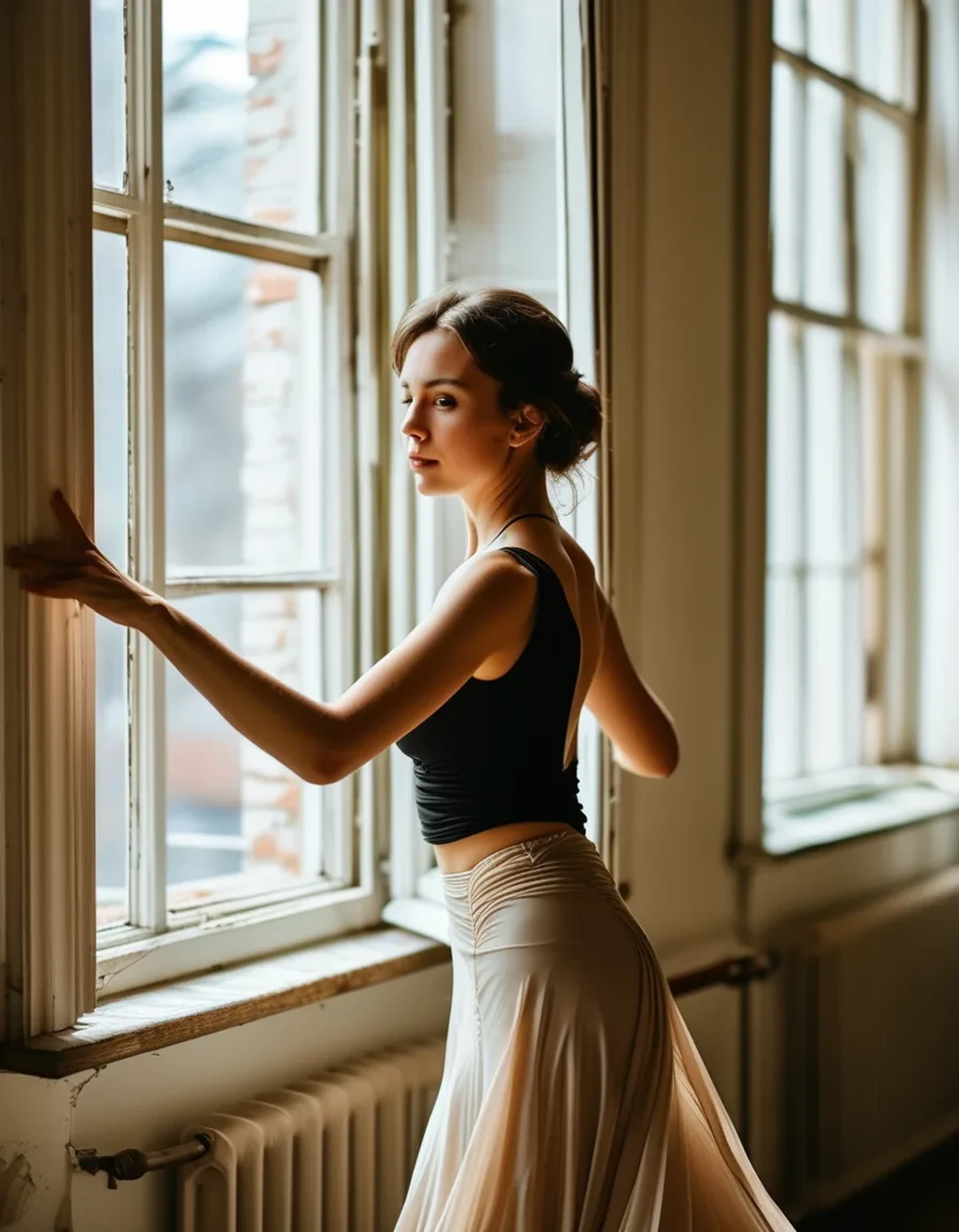
How to do it: set your frame as you would at the start of a waltz - shoulders down and back, elbows lifted and forward of the shoulder line, a lifted sternum without arching the lower back. Hold for 30 seconds. Rest 30. Repeat 6-8 times.
Why it’s the highest-value hot-weather drill: frame collapse mid-routine is one of the most common technical faults, and it’s an endurance problem as much as a technique one. The muscles holding a frame - mid and lower trapezius, rhomboids, and the deep postural chain - fatigue and let go partway through a song. Static holds train exactly that endurance.
How to make it harder without heat: hold a light resistance band between your hands at frame width, or hold small weights. Both increase demand on the muscles without increasing your heart rate meaningfully.
What to watch for: shoulders creeping up toward the ears, which is the first thing to go as you fatigue. A mirror is genuinely useful here.
Progression: build from 30 seconds to 90 seconds. Most songs run 2-3 minutes, so 90-second holds put you within reach of holding frame for a full dance.
Drill 2: Weight transfer without travel
What it is: the fundamental mechanic of ballroom - moving your weight fully from one foot to the other - practised in place.
How to do it: stand with feet slightly apart. Slowly transfer your full weight to one foot until the other could be lifted freely. Pause. Transfer back. Do it slowly enough that you can feel the moment the weight fully arrives.
Do 20 slow transfers. Then repeat with your eyes closed, which forces you to feel rather than see the transfer.
Why it matters more than it sounds: incomplete weight transfer is the root cause of a surprising number of visible problems - looking heavy, being hard to lead or follow, hesitating between figures. Most dancers transfer about 80% and start the next movement from a divided base.
The advanced version: transfer weight while maintaining frame, and notice whether your upper body shifts with the transfer. It shouldn’t - the movement should happen below, with the frame travelling as a unit rather than swaying.
Heat cost: essentially none. This is a drill you can do in a hot kitchen while the kettle boils.
Drill 3: Footwork patterns, flat, without rise and fall
What it is: running your figures at walking pace with no rise and fall, no sway, and no swing.
How to do it: take a basic figure - a natural turn, a reverse turn, whatever you’re working on - and walk it through slowly on flat feet. No rise, no lowering, no swing. Just foot positions and turn amounts.
Why this is genuinely useful and not just a reduced version: rise and fall, swing, and sway all disguise footwork errors. Stripped away, you can see exactly whether your feet are arriving where they should and whether your turn amount is right.
Most people discover something here. A heel turn that isn’t quite closing, a step that’s consistently short, a turn that’s 3/8 instead of 1/4. These errors are invisible at speed and obvious at walking pace.
Do it with a partner if available, but it works solo - and solo removes the confound of a partner compensating for your error.
Heat cost: minimal. You’re walking.
Time: 15 minutes on one figure is more productive than 15 minutes of full-out repetition, in any weather.
Drills 4 and 5: Arm styling and mental rehearsal
Drill 4: Isolated arm styling
What it is: practising arm lines, hand shapes, and styling movements without dancing.
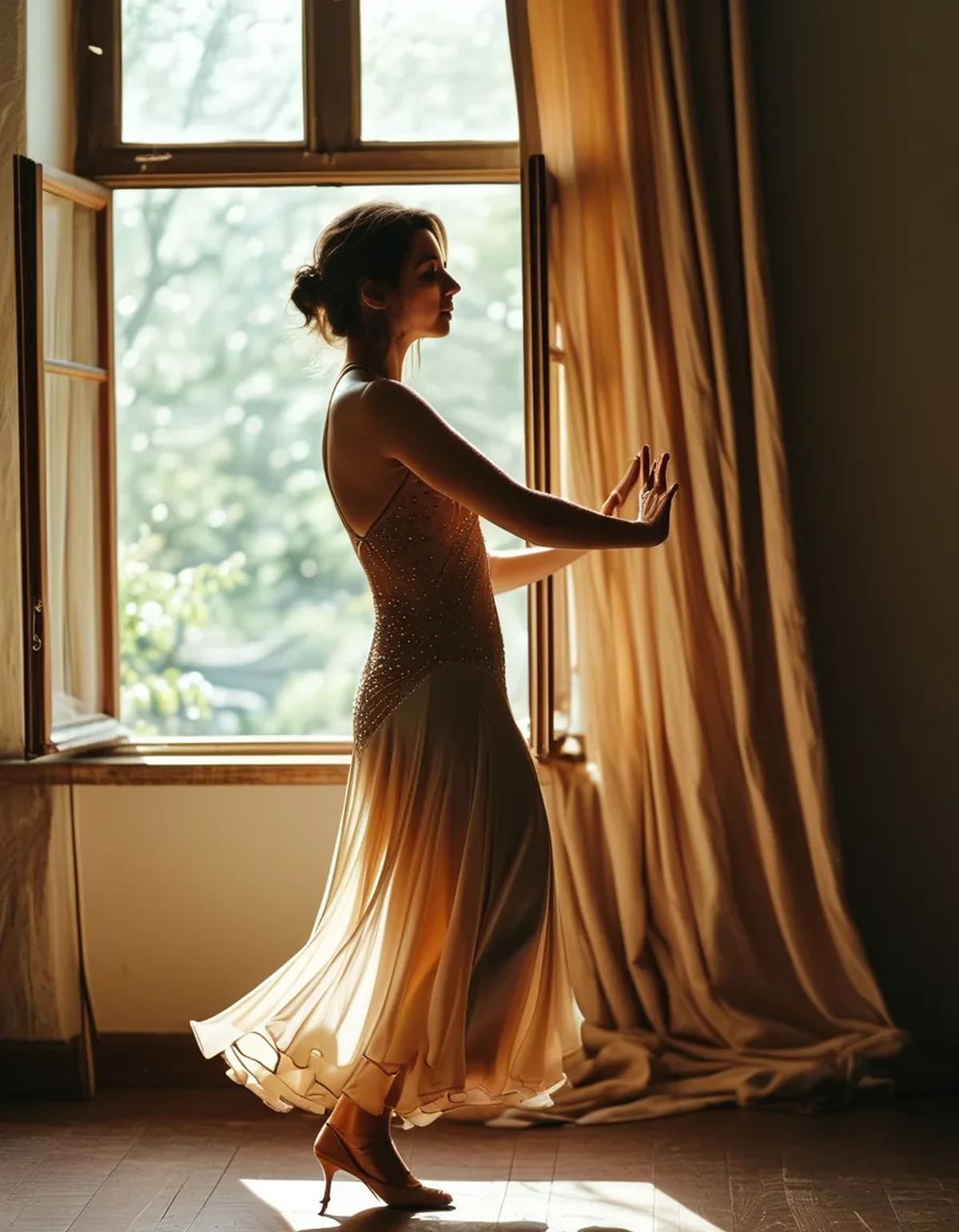
How to do it: stand in front of a mirror. Work through the arm positions in your routine one at a time, holding each for 5 seconds. Check: is the line continuous from shoulder through the fingertips? Are the fingers shaped rather than splayed or limp? Is the elbow soft rather than locked?
Why now: arm styling is almost always the last thing dancers work on and the first thing that falls apart under pressure, because it’s never been practised in isolation. Heat gives you a legitimate reason to do the thing you’ve been putting off.
Latin dancers: this is also the time to work on hand and finger detail, which is nearly impossible to focus on while also managing footwork and hip action.
Drill 5: Mental rehearsal
What it is: running your routine in your head, in real time, with full detail.
How to do it: sit or stand still. Play the music. Run the routine mentally at actual tempo, imagining the physical sensation of each movement - not just visualising it from outside, but feeling the weight transfer and the frame.
Why it isn’t a soft option: mental rehearsal is a well-established practice technique across sport and performance. Done properly, at real tempo with sensory detail, it’s demanding and it genuinely supports motor learning.
The tell that you’re doing it right: it’s tiring, and you lose your place if you’re not concentrating. If it’s easy, you’re watching rather than rehearsing.
Practical value: this is the only drill on the list you can do on a train, in a waiting room, or lying on a sofa at 30C.
FAQ: Hot Weather Ballroom Practice Questions, Answered
Will a month of low-intensity practice cost me fitness?
Some cardiovascular fitness, yes, if you do nothing else. Technique and motor learning don’t decline - and often improve, since these drills target things full-out practice skips.
Is it worth going to the studio for these, or can I do them at home?
Frame holds and arm styling benefit from a mirror. Weight transfer and mental rehearsal need nothing. Footwork patterns need a bit of floor space and ideally a smooth surface.
How long should a hot-weather practice session be?
30-40 minutes covers all five drills comfortably. That’s a productive session by any measure.
When should I go back to full-out practice?
When you can complete a routine without excessive fatigue in the conditions available. Cooler evenings usually arrive before cooler afternoons - shifting your practice time is often enough.
TL;DR:
- Heat is a good excuse to work on the technical elements full-out practice tends to skip
- Static frame holds train the endurance that prevents mid-routine frame collapse
- Slow weight transfer exposes the incomplete transfers that cause hesitation and heaviness
- Walking your figures flat, with no rise or swing, reveals footwork errors speed disguises
- Mental rehearsal at real tempo is demanding and genuinely supports motor learning
30-40 minutes of this beats a sweaty half-hour of imprecise full-out repetition.
Keep Reading
This article is for general informational and styling purposes only. Fit, sizing, and product availability may vary.