5 Fixes for Ballroom Frame Collapse That Actually Work
Quick Answer: Frame collapse in ballroom dancing almost always comes from insufficient back and shoulder engagement rather than arm weakness — five targeted fixes (back engagement, shoulder blade position, elbow height, core tension, and partner feedback) address the actual structural cause rather than just ‘trying harder’ to hold the frame.
Your arms ache by the end of a lesson, and your frame still collapses the moment your partner adds any resistance or speed. The arms aren’t the real problem — they’re just where the collapse shows up first.

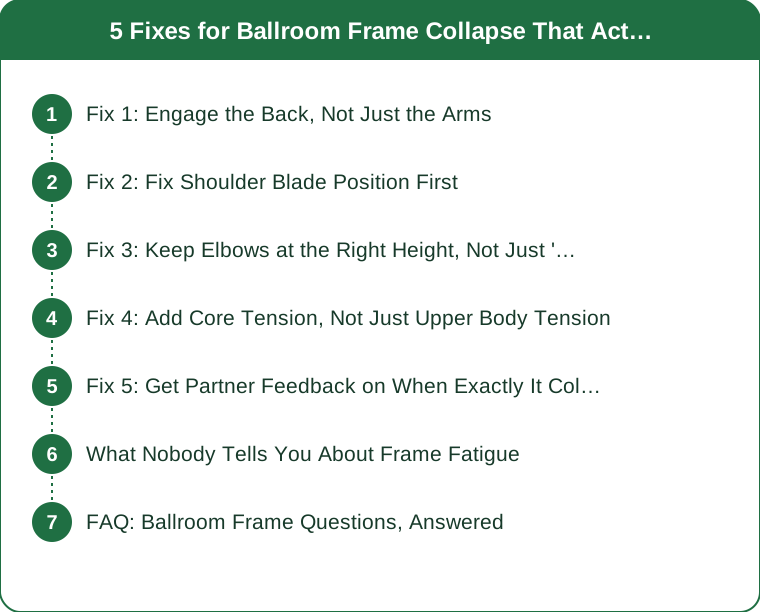
Fix 1: Engage the Back, Not Just the Arms
A strong frame is held primarily by the latissimus dorsi and mid-back muscles, not arm strength — arms that feel tired quickly are often compensating for an under-engaged back. Practice by pressing your shoulder blades gently down and together before raising your arms into frame position, and hold that back engagement throughout.
Fix 2: Fix Shoulder Blade Position First
Shoulders that creep up toward the ears under tension collapse the frame’s structural support instantly. Before starting a figure, consciously set shoulder blades down and slightly back, and periodically check (a mirror or video helps) that they’re staying there through movement, not creeping up as fatigue builds.
Fix 3: Keep Elbows at the Right Height, Not Just ‘Up’
Elbows dropped too low collapse the frame’s visual line and structural tension; elbows raised too high create unnecessary shoulder strain that also collapses over time. Elbows roughly level with the middle of your ribcage, held through back engagement rather than shoulder tension, tend to hold up best.

Fix 4: Add Core Tension, Not Just Upper Body Tension
A frame that relies purely on arm and shoulder tension without core support tends to collapse the moment a partner adds resistance or a fast turn happens. A braced, engaged core (not rigid, just active) gives the upper body frame a stable base to work from, especially during turns.
Fix 5: Get Partner Feedback on When Exactly It Collapses
Frame collapse often happens at a specific, repeatable moment — a particular turn, a lead/follow transition, a specific tempo — rather than randomly. Ask your partner or instructor to flag the exact moment it happens across several attempts; that specific pattern points to exactly which fix (back, shoulders, elbows, or core) needs the most attention.
What Nobody Tells You About Frame Fatigue
Frame collapse that appears only late in a song or lesson, not early on, usually points to an endurance gap in back and postural muscles rather than a technique flaw — building frame-holding endurance (practicing frame position statically for 30-60 seconds without dancing) directly addresses this specific pattern.
FAQ: Ballroom Frame Questions, Answered
How long does it typically take to build a stable frame?
Most dedicated beginners see real frame stability improvement within 8-12 weeks of consistent lessons and practice, though full endurance through longer routines can take longer.
Should I practice frame without a partner?
Yes — static frame holds in front of a mirror, and shadow practice of full figures, both build the muscular endurance and awareness that’s harder to isolate with a partner adding resistance.
Does frame collapse differently in different dance styles?
Yes — Latin styles generally use a looser, more flexible frame than Standard/Smooth styles, so ‘collapse’ looks and feels somewhat different depending on which style you’re dancing.
TL;DR:
- Frame collapse usually comes from under-engaged back muscles, not weak arms
- Set shoulder blades down and back before raising arms into frame
- Keep elbows roughly rib-height, held by back engagement not shoulder tension
- Add core bracing for stability during turns and resistance
- Ask a partner to flag exactly when it collapses to target the right fix
A collapsing frame is a structural engagement problem, not a strength or effort problem — find the specific moment it fails and address the actual muscle group responsible, rather than just gripping harder with your arms.
Keep Reading
This article is for general informational and styling purposes only. Fit, sizing, and product availability may vary.