How to Actually Improve at Ballroom Dance Between Lessons, Without a Partner
Most ballroom students only practice when a partner is available, which usually means once a week at the lesson itself. But a surprising amount of what makes a dancer look confident — frame, footwork precision, musicality — can be built entirely alone. Here’s why solo practice actually works for ballroom specifically, which skills transfer best from solo drilling to partnered dancing, and a simple weekly structure that fits into fifteen minutes.
Why Solo Practice Actually Works for Ballroom
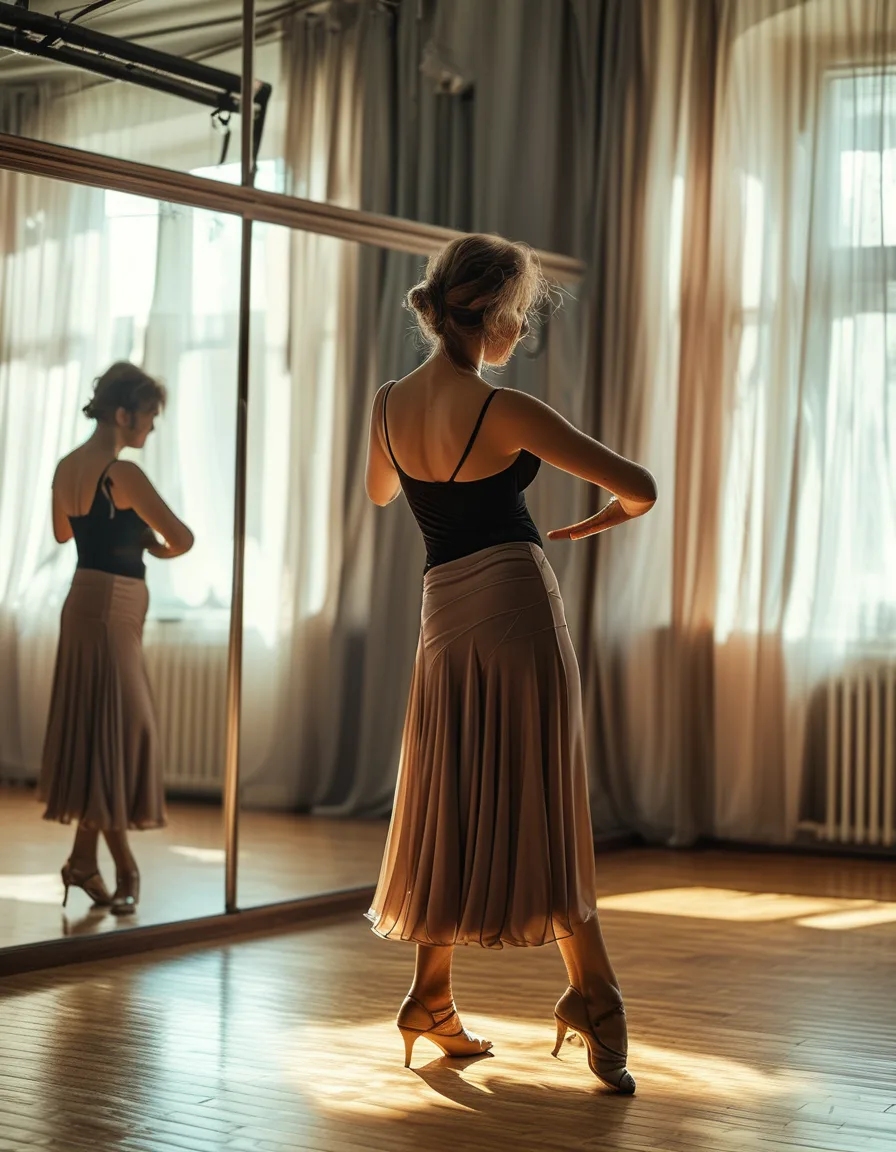
The case against waiting: the the-frame-is-built-alone-first (the a strong ballroom frame — shoulders, arms, posture — being an individual skill that a partner doesn’t create, only reveals whether it’s solid, echoing the individual-hold logic in ballroom-dance-frame-guide — the frame-is-solo-work-wearing-a-partnered-disguise), the the-footwork-precision-needs-repetition-not-a-partner (the exact foot placement and weight transfer on basic steps benefiting from dozens of slow repetitions that a partner’s presence doesn’t add value to — the footwork-drilling-is-repetition-not-connection), the the-musicality-is-an-internal-skill (the counting and feeling the beat of a waltz or foxtrot developing through listening and moving alone, independent of partner timing — the musical-sense-comes-from-inside-not-from-a-partner), the the-lesson-time-is-too-short-to-build-basics-from-scratch (the weekly lesson time getting consumed re-teaching basics that could have been drilled solo, leaving less time for the actual partnered skill of leading and following — the wasted-lesson-time-is-the-real-cost-of-skipping-solo-practice), the the-mirror-catches-what-a-partner-cant-always-see (the a mirror giving direct visual feedback on posture and frame that a partner focused on their own steps might miss — the self-observation-is-a-different-feedback-channel), and the reframe (the once-a-week partner practice as the bottleneck, not the actual limit on how much a dancer can improve).
Which Skills Transfer Best From Solo to Partnered Dancing
What actually carries over: the the-frame-and-posture-transfer-almost-completely (the a frame built and held correctly alone translating directly into partnered work, since the muscles and alignment don’t change once a partner’s hand is added — the frame-built-right-just-works-when-partnered), the the-footwork-timing-transfers-with-adjustment (the solo-drilled footwork needing only minor timing adjustment to sync with a partner’s steps, rather than being relearned from scratch — the timing-adapts-precision-doesnt-need-rebuilding), the the-musicality-transfers-directly (the hearing and counting music the same way whether alone or partnered, making solo musicality practice a direct skill transfer — the ear-training-doesnt-care-who-else-is-in-the-room), the the-leading-and-following-do-not-transfer-from-solo (the the actual give-and-take of leading or following requiring a real partner and not being fakeable through solo drilling, unlike ballroom-dance-frame-guide’s static-hold basics — the connection-is-the-one-skill-solo-practice-cant-fully-replace), the the-confidence-transfers-surprisingly-well (the feeling secure in one’s own steps solo reducing the hesitation that often shows up when a partner is added, since less mental bandwidth goes to basic uncertainty — the solo-confidence-frees-up-attention-for-the-partner), and the frame (the frame, footwork and musicality as the high-transfer skills worth prioritizing solo, while connection stays reserved for lesson time).
A Simple Weekly Structure That Fits Into Fifteen Minutes
The actual routine: the the-five-minutes-frame-holds-in-the-mirror (the standing in full ballroom frame for timed intervals while checking shoulder and arm position in a mirror, building the muscular endurance that a full dance requires — the endurance-for-frame-is-built-in-small-doses), the the-five-minutes-slow-footwork-without-music (the walking through basic step patterns at quarter speed with attention only on exact foot placement, no music yet — the slow-and-silent-isolates-the-footwork-from-timing-pressure), the the-five-minutes-same-footwork-with-music (the repeating the same steps at full tempo with music once the slow version feels automatic, layering timing on top of already-solid footwork — the add-music-only-after-the-feet-know-the-pattern), the the-once-a-week-video-check (the recording one short clip weekly to compare frame and footwork against the previous week, catching drift that daily practice alone might not reveal — the weekly-video-catches-what-daily-practice-misses), the the-rotate-through-different-dances-not-just-one (the spending different weeks on waltz, foxtrot or rumba basics rather than only drilling whichever dance is up next in lessons, building broader technical range — the variety-prevents-tunnel-vision-on-one-dance), and the frame (the fifteen minutes split into frame, slow footwork and musical footwork as a structure any student can sustain daily, with a weekly video check keeping it honest).
Ballroom dance looks like it can only be practiced with a partner, but frame, footwork precision and musicality — arguably the three things that separate a confident dancer from a hesitant one — are all buildable alone, and building them solo means lesson time can actually go toward leading and following instead of re-teaching basics. A simple fifteen-minute weekly structure of mirror frame holds, slow footwork, and the same footwork with music covers most of what solo practice can offer, with a weekly video check catching the drift that’s easy to miss in the moment. The partner is still essential for connection — it just doesn’t need to be present for everything else.
Keep Reading
This article is for general informational and styling purposes only. Fit, sizing, and product availability may vary.