3 Reasons Your Ballroom Dancing Has Plateaued (and What Actually Fixes It)
Quick Answer: Ballroom plateaus usually trace to frame habits that got locked in early, practicing steps without practicing musicality, or staying in the same partner pairing too long. Each has a specific, fixable cause — it’s rarely ‘just needing more practice.’
You know the steps cold. Your feet aren’t the problem anymore. But something still feels the same as it did three months ago, and more repetition of the same routine hasn’t moved the needle.

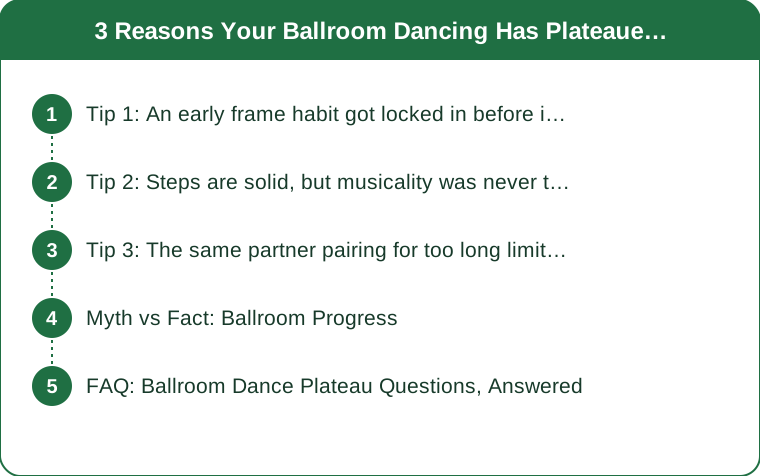
Tip 1: An early frame habit got locked in before it was corrected
Frame is one of the first things learned and one of the last things actually fixed, because it stops feeling wrong long before it becomes visibly right. A collapsed frame or dropped elbow from your first few months can silently cap how advanced your movement can look, even years later — worth a frame-specific lesson, not just more social dancing.
Tip 2: Steps are solid, but musicality was never trained separately
Knowing a pattern and dancing it to the music’s actual phrasing are different skills. Many dancers plateau because they drill steps in isolation and never practice matching accents, pauses, and dynamics to specific songs — which is exactly what separates competent from compelling on a floor.

Tip 3: The same partner pairing for too long limits new feedback
A consistent partner builds chemistry, but it can also mean you’ve both adapted to compensate for each other’s habits rather than fixing them. Dancing with 1-2 new partners periodically tends to surface issues a familiar partner has stopped noticing entirely.
Myth vs Fact: Ballroom Progress
Myth: A plateau means you need to learn more advanced steps. Fact: Most plateaus are quality issues in existing steps (frame, timing, connection), not a shortage of new patterns — adding complexity on a shaky foundation usually just adds new problems.
Myth: Private lessons matter less once you know the basics. Fact: Private lessons become more valuable past the beginner stage, since group classes can’t catch the individual habit that’s actually capping your progress.
Myth: Competition dancers don’t hit plateaus. Fact: Plateaus are universal at every level — what changes is that advanced dancers have coaches specifically trained to spot the plateau’s real cause faster.
FAQ: Ballroom Dance Plateau Questions, Answered
How do I know if my plateau is a frame issue?
Ask an instructor to watch specifically for elbow height, shoulder tension, and connection through the arms — frame issues are hard to self-diagnose in a mirror because they often feel correct.
Should I switch dance styles to break a plateau?
It can help — cross-training in a different style (Latin if you’re standard-focused, for example) often exposes timing or hip-movement habits your main style has let slide.
How long is a normal plateau before it’s worth addressing directly?
A few weeks of feeling stuck is normal; past 2-3 months with no shift is a good signal to book a private lesson focused specifically on diagnosis, not new material.
TL;DR:
- Frame habits from your first months often go uncorrected and quietly cap progress
- Musicality is a separate skill from knowing steps — train them independently
- A long-term partner pairing can mask habits a new partner would immediately notice
- Plateaus are universal at every level — the fix is diagnosis, not more repetition
Book one lesson specifically to diagnose the plateau rather than to learn something new — the cause is usually smaller than it feels.
Keep Reading
This article is for general informational and styling purposes only. Fit, sizing, and product availability may vary.