5 Signs Your Ballroom Dance Frame Is Actually Improving (Even If It Still Feels Awkward)
Quick Answer: The clearest sign is your partner needing less physical correction or resistance to guide you through a lead — frame improvement often shows up first as “easier to dance with,” reported by your partner, before it feels different to you.
Frame feels like something you’re always working on and never quite “arrived” at, which makes it hard to know if practice is actually paying off. These five signs are more reliable than how confident your frame feels in the moment.
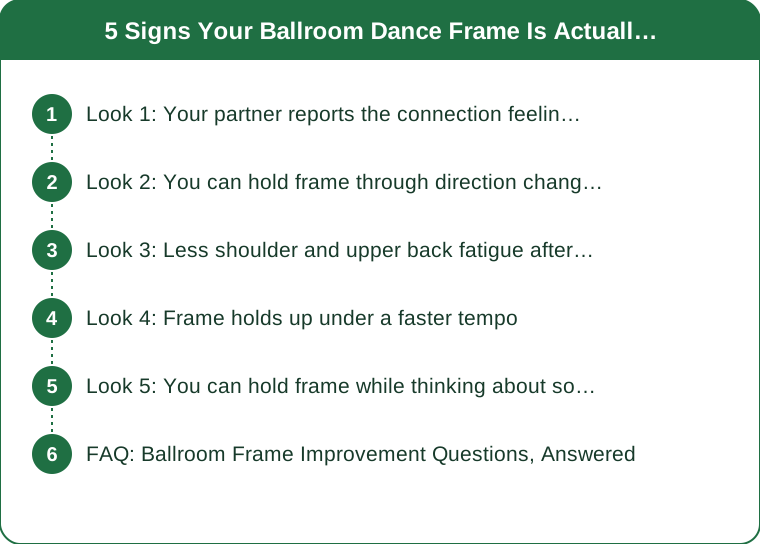
Look 1: Your partner reports the connection feeling clearer
This is often the first and most reliable sign, since your partner feels changes in your frame’s stability and resistance before you consciously notice them yourself. A partner comment like “that felt easier to lead” is meaningful data, worth actually asking about after practice.
Look 2: You can hold frame through direction changes without collapsing
Early on, frame tends to break down specifically during turns and direction changes, when maintaining tone through movement is hardest. Holding shape through these transitions — not just in static position — is a clear marker of genuine improvement.
Look 3: Less shoulder and upper back fatigue after practice
Counterintuitively, a good frame is less fatiguing than a tense, overworked one, because correct frame uses core and back engagement efficiently rather than gripping through the shoulders. Decreasing post-practice fatigue, at the same practice intensity, often signals more efficient (and therefore better) frame technique.
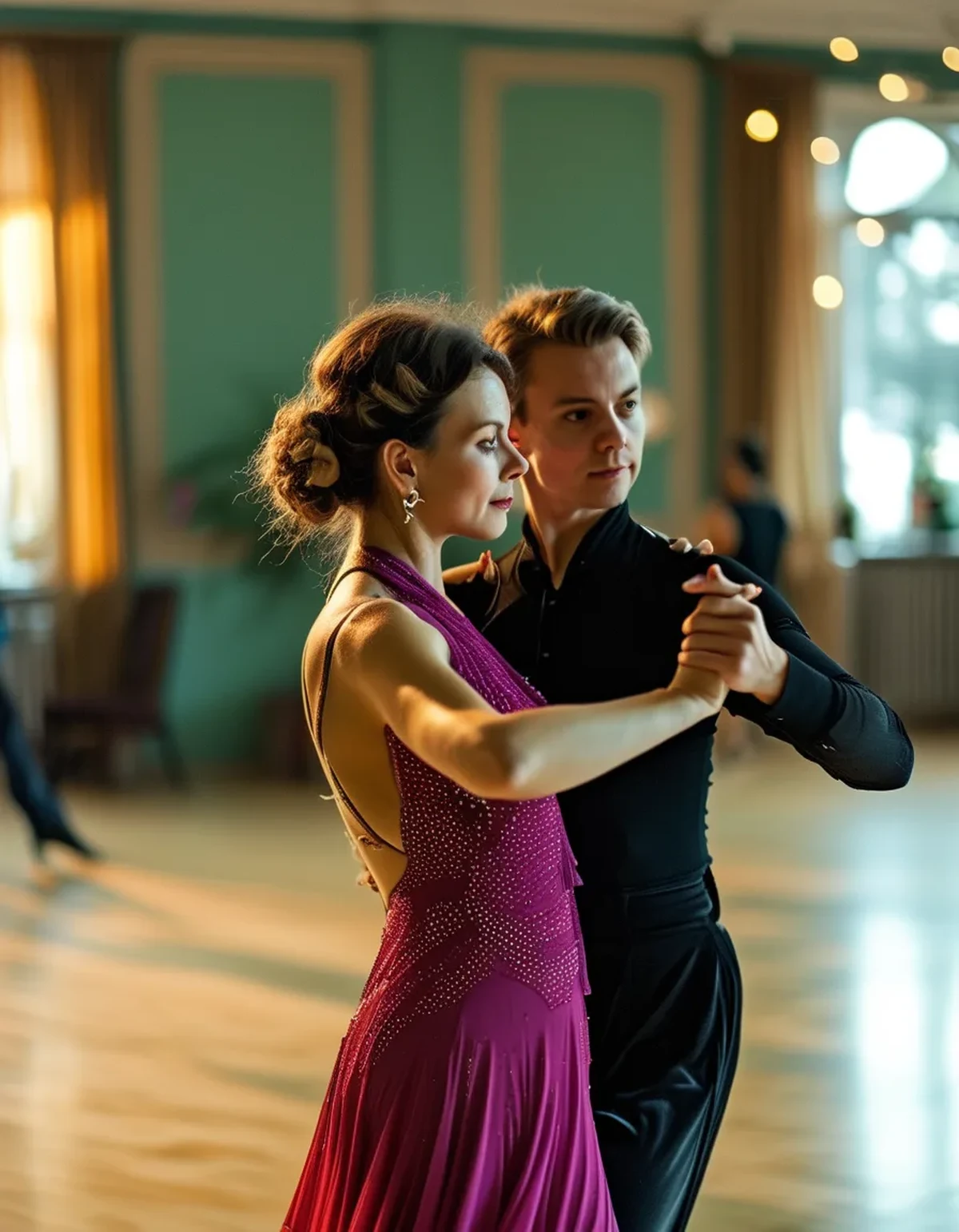
Look 4: Frame holds up under a faster tempo
Frame that looks fine at a slow practice tempo but collapses at full performance speed indicates the frame isn’t yet automatic — it’s still requiring conscious effort that runs out of bandwidth at higher tempo. Frame holding at full speed is a genuine progress marker slower practice can’t fully reveal.
Look 5: You can hold frame while thinking about something else
As frame becomes more automatic, it requires less conscious attention — you can focus on musicality, footwork, or your partner’s lead instead of actively thinking “keep my frame up.” This mental bandwidth freeing up is one of the clearest internal signs of real technical progress.
FAQ: Ballroom Frame Improvement Questions, Answered
How long does it typically take to build a solid ballroom frame?
Most dancers report frame starting to feel more automatic after 3-6 months of consistent practice, though it continues refining well beyond that timeframe.
Should I practice frame without a partner?
Yes — solo frame drills (holding position against a mirror, or with resistance bands) build the underlying strength and muscle memory that partner practice alone doesn’t isolate as effectively.
Is frame fatigue always a bad sign?
Some fatigue when building new strength is normal, especially early on — it’s specifically decreasing fatigue at the same intensity over time that signals improving efficiency, not the presence of any fatigue at all.
TL;DR:
- Ask your partner — they often feel frame improvement before you do
- Holding frame through turns, not just standing still, is the real test
- Decreasing fatigue at the same intensity signals more efficient technique
- Frame holding up at full tempo and under mental distraction marks real automaticity
Keep Reading
This article is for general informational and styling purposes only. Fit, sizing, and product availability may vary.